Choosing the Best Managed Detection and Response Services in 2026: An Executive Buying Guide
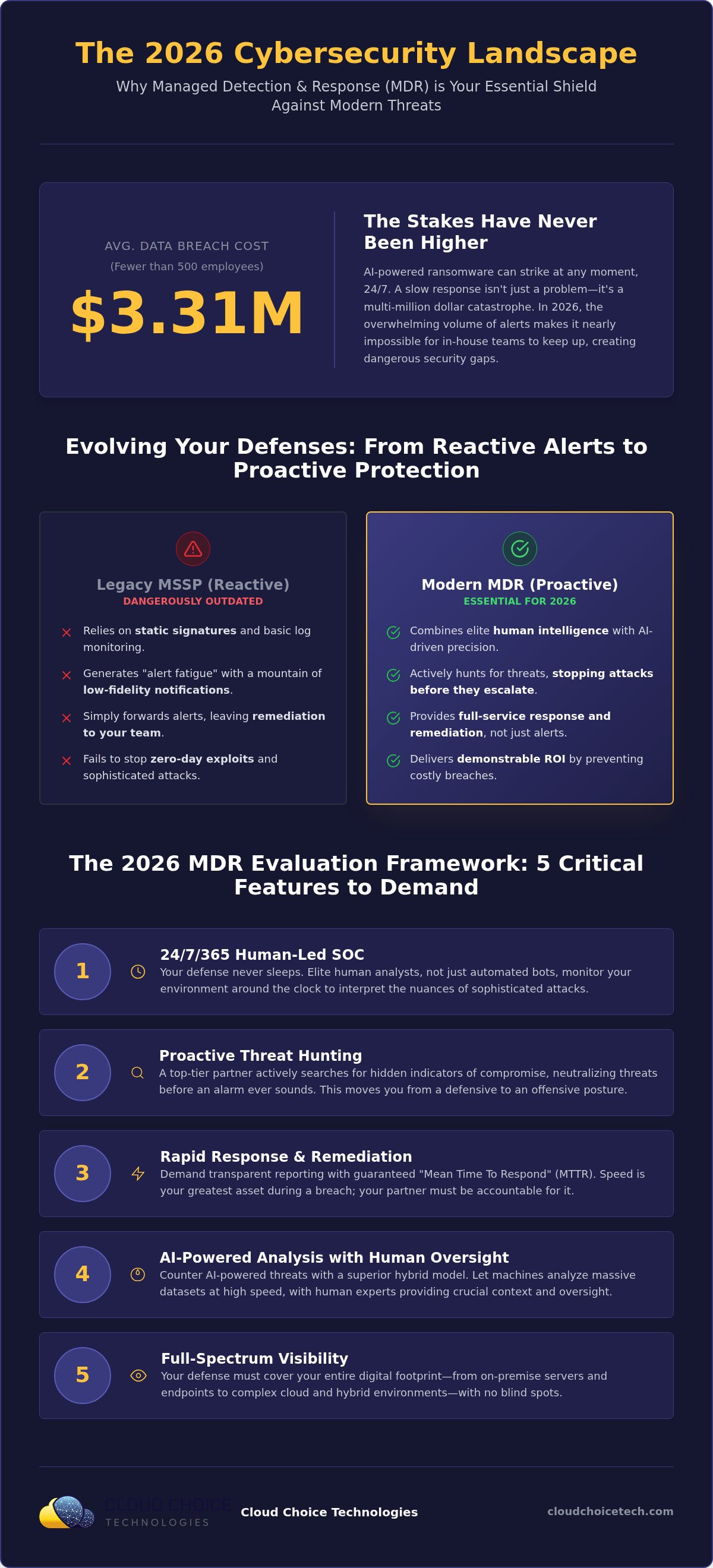
If an AI-powered ransomware attack hits your network at 2:00 AM on a Sunday, does your team have the specialized tools to stop it before it encrypts your infrastructure? The average cost of a data breach for organizations with fewer than 500 employees has reached $3.31 million, making the stakes of a slow response higher than ever. You likely already know that building a 24/7 security operations center is cost-prohibitive, yet the overwhelming volume of daily alerts makes it difficult to retain the talent needed to manage your security posture. This is why leaders are increasingly relying on managed detection and response services to bridge the gap.
We understand the anxiety that comes with digital uncertainty. You need more than just a software subscription; you need a vigilant, fast-acting partner that provides total control over complex threats. This guide will help you evaluate the 2026 landscape to identify the high-performance partnership your organization requires. We'll show you how to reduce your mean time to detect (MTTD), secure 24/7 peace of mind, and ensure your security spend delivers a demonstrable ROI. You'll gain a clear roadmap for choosing a guardian that handles the complexities of the digital world so you don't have to.
Key Takeaways
- Learn why managed detection and response services offer a superior defense compared to legacy tools by combining elite human intelligence with AI-driven precision.
- Identify the critical features of a 2026 security partnership, including 24/7 SOC availability and proactive threat hunting that stops attacks before they escalate.
- Compare the total cost of ownership between an in-house security team and an MDR provider to see how you'll solve the talent gap while maximizing ROI.
- Discover how integrating cyber risk analysis into your response strategy creates a proactive shield that protects your infrastructure from modern ransomware.
Beyond Basic Monitoring: Why Managed Detection and Response is Essential in 2026
The security landscape in 2026 is no longer a battle of human versus human; it's a high-speed contest of precision and elite readiness. Managed detection and response (MDR) represents the critical fusion of advanced threat-hunting technology and elite human expertise. Unlike traditional security measures that rely on static signatures, managed detection and response services provide a proactive shield designed to neutralize threats before they cause operational downtime. This model moves beyond passive observation to active intervention, ensuring your organization stays ahead of sophisticated adversaries.
Many executives find themselves trapped in a cycle of "alert fatigue." Buying more tools often results in less security because your internal team becomes buried under a mountain of low-fidelity notifications. In 2026, automated attacks can penetrate a network in seconds. You don't need more alerts; you need a vigilant partner who can distinguish between a routine system update and a sophisticated breach attempt. By offloading the noise to a dedicated team, you regain the clarity needed to focus on your core business objectives.
The Limitations of Traditional Managed Security
Log monitoring was sufficient a decade ago, but it fails to catch modern lateral movement where attackers "live off the land" using legitimate system tools. Legacy managed security service providers (MSSPs) typically focus on identifying a problem and sending an email, leaving the heavy lifting of remediation to your already overstretched staff. This creates a dangerous gap between detecting a threat and responding to it in real-time. Legacy MSSPs often fail to stop zero-day exploits because their reactive models lack the deep forensic capabilities required to intercept unknown vulnerabilities.
Countering AI-Powered Cyber Threats
Threat actors now use generative AI to create polymorphic malware that bypasses standard endpoint detection by constantly changing its code structure. This rise in AI-powered cyber threats has transformed business risk from a technical concern into a core survival issue for modern enterprises. Static defenses simply cannot keep pace with the velocity of machine-led attacks.
Your MDR partner must utilize AI-driven organizational protection to analyze massive datasets at machine speed while maintaining rigorous human oversight. This hybrid approach ensures that your defense evolves as quickly as the attackers do. It provides the calm confidence you need, knowing that a sophisticated entity is handling the complexities of the digital world so you don't have to.
The 2026 MDR Evaluation Framework: 5 Critical Features to Demand
Selecting the right partner is a strategic decision that impacts your organization's long-term stability. You shouldn't settle for a provider that simply passes alerts to your inbox. A high-performance framework for managed detection and response services must prioritize human intelligence and rapid intervention. Demand a 24/7/365 Security Operations Center (SOC) where human analysts, not just automated bots, monitor your environment. While software can flag anomalies, only a human expert can interpret the nuance of a sophisticated attack.
Your provider should offer transparent reporting with clear "mean time to respond" (MTTR) guarantees. Speed is your greatest asset during a breach. If a partner can't commit to specific response timelines, they aren't a guardian; they're a liability. This level of accountability aligns with Gartner's definition of MDR, which emphasizes the delivery of managed security outcomes rather than just tool management.
Human-Led Threat Hunting vs. Automated Alerts
The "Managed" in MDR refers to the elite human expertise behind the glass. Automated alerts are often noisy and lack the contextual intelligence needed to distinguish a legitimate administrative task from a malicious actor. When evaluating providers, ask about their SOC analyst qualifications and how they conduct proactive threat hunting. You need a team that actively searches for hidden indicators of compromise rather than waiting for an alarm to sound. Our team provides this level of cybersecurity services to ensure your operations remain uninterrupted.
Full-Spectrum Visibility Across Hybrid Environments
In 2026, your data isn't confined to a single office. Your defense must cover cloud, on-premise, and remote endpoints simultaneously. This requires managed cloud security services that can ingest telemetry from diverse sources, including identity providers and SaaS applications. Without this full-spectrum visibility, attackers can hide in the gaps between your disconnected tools.
Finally, ensure your MDR solution integrates seamlessly with your broader managed IT services. When a threat is detected, the remediation process should be immediate and coordinated. A unified approach to managed detection and response services prevents the finger-pointing that often occurs between separate vendors during a crisis.
Strategic Comparison: MDR vs. Building an In-House SOC
Deciding between building an internal security team or partnering with a provider is a high-stakes choice for any executive. Building a 24/7 internal Security Operations Center (SOC) is a monumental undertaking that requires at least 8 to 12 full-time analysts to maintain coverage across nights, weekends, and holidays. With salaries for skilled analysts ranging from $85,000 to $140,000 each, the annual investment often exceeds $2 million before you even purchase a single piece of software. In contrast, managed detection and response services provide immediate access to an elite team for a fraction of that cost.
Speed is your greatest asset in 2026. An internal build-out can take months or even years to reach full operational maturity. You have to recruit, onboard, and train specialized Tier 3 analysts who are currently in extremely high demand and short supply. MDR services can be deployed in weeks, providing a "global immune system" effect. Because these providers see threats across thousands of endpoints, they apply the intelligence gained from one attack to protect all their clients simultaneously. This level of shared foresight is impossible to replicate within a siloed internal team.
The Real Cost of Internal Security Operations
Total cost of ownership (TCO) extends far beyond payroll. You must also factor in the price of a sophisticated technology stack, including SIEM, EDR, and SOAR tools, which require constant tuning and maintenance. Staff turnover presents another hidden risk; losing a key analyst can leave your network vulnerable for months during the rehiring process. While internal management brings volatile, unpredictable expenses related to training and technology refreshes, MDR offers a predictable monthly cost that aligns with your long-term budget goals.
Scalability and Operational Continuity
Your security must scale as fast as your business grows. MDR scales instantly, protecting new cloud environments or remote offices without requiring you to hire more staff. This ensures total continuity during vacations or turnover, as the "always-on" guardian never sleeps. Organizations often find that a partner who handles regulatory compliance IT support alongside security provides a more cohesive defense. This approach mirrors the rigor found in public sector frameworks like CIS Managed Detection and Response, which sets a high bar for proactive oversight.
Don't let the complexity of building an internal team distract you from your core mission. Contact our experts today to see how we can provide the elite readiness your organization deserves.
Securing Your Infrastructure: The Cloud Choice MDR Advantage
Cloud Choice Technologies acts as the vigilant guardian of your corporate data. We don't just monitor your network; we intervene with professional precision. Our managed detection and response services provide the elite readiness required to navigate the high-stakes environment of 2026. We utilize a national reach to protect US-based organizations, ensuring that your infrastructure remains resilient against sophisticated adversaries. By combining cyber risk analysis with active MDR, we provide a defense strategy that is both informed and immediate.
We treat AI compliance and security as a foundational element of our service. As threat actors weaponize machine learning to accelerate their attacks, your defense must evolve at the same speed. Our integrated approach ensures that your organization stays ahead of automated threats while maintaining the rigorous standards your stakeholders expect. You gain the peace of mind that comes from a partner who handles the complexities of the digital world so you don't have to.
Compliance-First Cybersecurity
Modern businesses face a complex web of mandates that can be overwhelming to manage internally. Our managed detection and response services are specifically designed to help you meet stringent cyber insurance compliance requirements, which now frequently demand proof of 24/7 monitoring. For healthcare providers, our specialized HIPAA compliance IT services protect patient data through every digital interaction. Organizations preparing for financial services IT compliance benefit from our continuous oversight, which creates a stable, audit-ready infrastructure.
Proactive Risk Mitigation and Rapid Response
Detection is only half the battle. Our methodology focuses on moving from initial identification to active neutralization in minutes. This speed prevents lateral movement and contains threats before they can impact your operations. Our remote support team functions as a seamless extension of your executive leadership, providing the calm confidence needed during high-pressure situations. We prioritize your business continuity above all else, acting as the "calm in the storm" for your digital environment.
Protect your business with a comprehensive cyber risk analysis from Cloud Choice Technologies and identify the high-performance security partnership your organization needs today.
Achieving Elite Readiness in an Evolving Threat Landscape
The shift toward AI-powered ransomware and automated exploits means your defense must be faster and more precise than ever. You've seen that building an internal SOC is often a multi-million dollar commitment that takes years to mature. By choosing managed detection and response services, you bypass the talent gap and gain immediate access to a vigilant, fast-acting partner. This strategic partnership ensures your operations remain continuous while removing the stress of digital uncertainty.
Cloud Choice Technologies provides the "calm in the storm" through our national US security infrastructure and 24/7 vigilant guardian support. We integrate specialized AI compliance frameworks to ensure your organization stays ahead of both attackers and regulators. Don't leave your infrastructure to chance. Request a Comprehensive Cyber Risk Analysis Today to identify the high-performance partnership your organization needs. You deserve the peace of mind that comes from total control over your digital environment.
Frequently Asked Questions
What is the difference between EDR and managed detection and response services?
EDR is a software tool that monitors your devices, while MDR is the comprehensive service that manages those tools. EDR provides the necessary telemetry, but it requires a skilled human analyst to interpret the data and make critical decisions. MDR combines this advanced technology with an elite team of experts who provide 24/7 oversight. This ensures that sophisticated threats are neutralized before they can impact your business operations.
How does MDR help my business meet cyber insurance compliance requirements?
MDR helps you meet cyber insurance requirements by providing the 24/7 monitoring and documented incident response capabilities that underwriters now demand. Insurers often require proof of continuous oversight to approve coverage or offer lower premiums. By maintaining a high-performance security partnership, you demonstrate a proactive approach to risk management. This level of readiness provides the peace of mind insurers look for when evaluating your organization's digital stability.
Can MDR services replace my existing IT team?
MDR is meant to empower your existing IT team rather than replace it. Your internal staff stays focused on high-value business projects and daily infrastructure needs, while managed detection and response services handle the specialized burden of security monitoring. This collaboration prevents your team from suffering through alert fatigue. It allows them to operate with confidence, knowing a vigilant partner is handling the complex threat landscape around the clock.
How quickly can an MDR provider respond to a ransomware attempt?
An MDR provider initiates a response in minutes, often neutralizing a ransomware attempt before your team even realizes an attack is underway. While automated tools might flag a suspicious file, human analysts immediately investigate to confirm the threat and trigger containment protocols. This speed is vital for preventing the encryption of your data. Rapid intervention stops attackers from moving laterally through your network, protecting your most sensitive corporate assets.
Does MDR include remediation, or just notification of a threat?
MDR provides full remediation and active threat containment rather than just sending you a notification. When a threat is detected, the service takes immediate action to isolate compromised endpoints and block malicious communication. You aren't left with a complex task list to solve on your own. Instead, managed detection and response services deliver a resolved incident report, ensuring your environment is clean and your operations continue without interruption.
What is the typical ROI for switching from an in-house SOC to MDR?
The ROI of switching to MDR is found in the massive savings on recruitment, training, and staffing costs for a 24/7 internal SOC. You replace high, volatile overhead with a predictable monthly investment. Beyond payroll savings, industry data shows that proactive monitoring reduces breach impact. Organizations with these capabilities contain breaches 108 days faster on average, which significantly reduces the potential costs associated with data recovery and legal fees.