
What is a Cyber Risk Assessment? The 2026 Executive Buying Guide
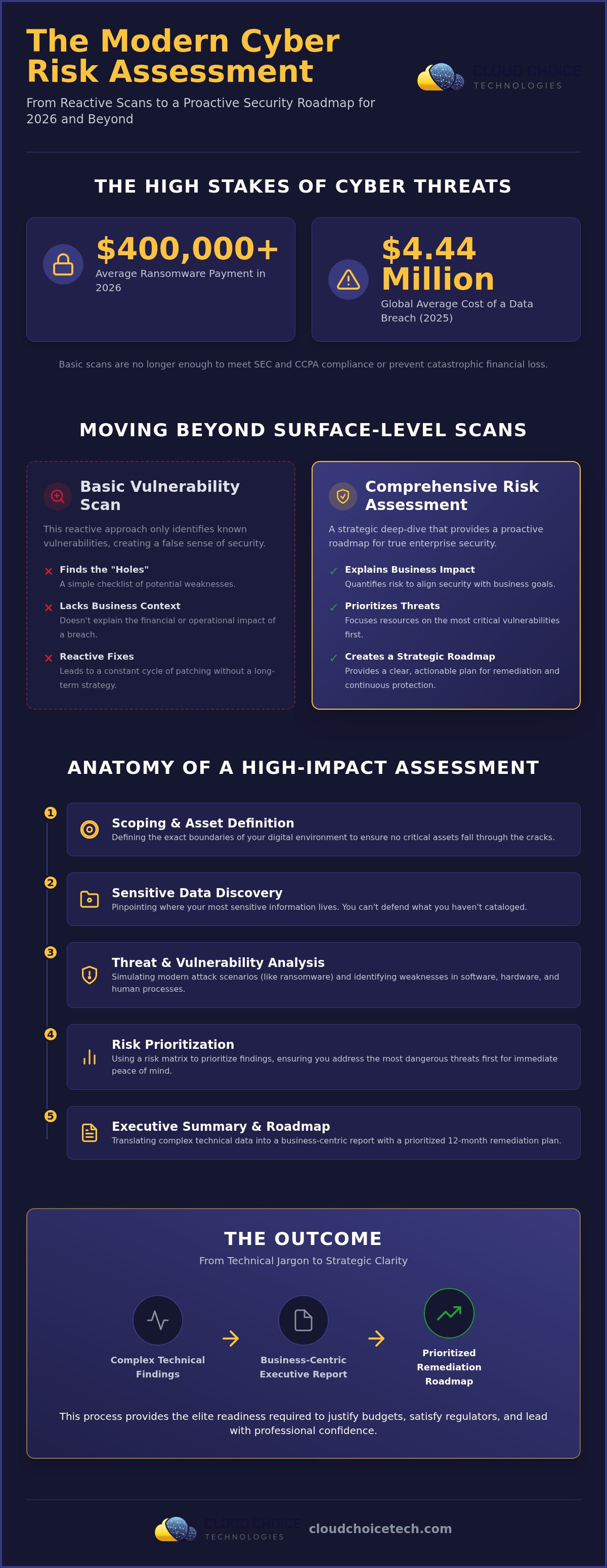
The average ransomware payment in 2026 now exceeds $400,000, a figure that doesn't even account for the reputational damage or operational downtime that follows. Many leaders realize that basic security scans are no longer enough to satisfy the 2026 SEC disclosure rules or CCPA audit requirements. To truly secure your enterprise, you must move beyond reactive fixes and understand what is a cyber risk assessment in the context of modern, AI-driven threats. It's the difference between guessing where your vulnerabilities are and having a precise, data-backed inventory of your digital exposure.
You likely feel the pressure of rising cyber insurance premiums and the confusion of complex compliance frameworks like NIST or ISO 42001. It's frustrating to invest in security only to wonder if a hidden gap is still lurking in your network. This guide promises to clear that fog by showing you how a comprehensive assessment identifies critical gaps and provides a strategic roadmap for remediation. We will explore how to prioritize your security budget, meet rigorous regulatory standards, and transition from a state of uncertainty to one of elite readiness and professional confidence.
Key Takeaways
- Define what is a cyber risk assessment to move beyond surface-level scans and establish a rigorous security foundation.
- Locate your most sensitive data assets through precise scoping and discovery. This prevents hidden vulnerabilities from causing operational downtime.
- Integrate AI risk management to protect your organization from the sophisticated, automated threats defining the 2026 digital landscape.
- Convert complex technical findings into a prioritized roadmap for remediation that provides immediate peace of mind for stakeholders.
- Select a partner with the expertise to bridge the gap between initial assessment and continuous, proactive protection.
What is a Cyber Risk Assessment? Defining the Strategic Foundation
A cyber risk assessment is a systematic evaluation of your organization’s ability to protect its data, systems, and operational integrity. It isn't a simple checklist. It’s a strategic deep-dive into your digital infrastructure. Many executives mistakenly believe a vulnerability scan is sufficient, but a scan only identifies the holes. Understanding what is a cyber risk assessment means recognizing it as the process that explains the business impact of those holes. In 2026, the shift from reactive defense to proactive management is mandatory for survival.
Why is this baseline so critical? Without it, you’re flying blind. An assessment establishes a clear starting point for business continuity, ensuring that if a threat materializes, your response is calculated rather than chaotic. It provides the elite readiness required to face sophisticated, automated threats that can bypass traditional perimeter defenses.
The Core Objectives of Modern Risk Analysis
Modern risk analysis moves beyond generalities to focus on your specific business DNA. We prioritize high-value digital assets and sensitive data that drive your revenue. We don't just look at technical bugs; we evaluate the likelihood and potential impact of threat vectors like ransomware or credential theft. By integrating established cybersecurity risk assessment methodologies, we align technical findings with your actual risk tolerance. This ensures your security strategy supports your business goals instead of hindering them.
Why "Good Enough" Security is a Critical Risk
Relying on outdated "break-fix" models is a recipe for disaster. If you wait for an alert to act, the damage is already done. Average ransomware payments in 2026 now exceed $400,000, making a reactive posture incredibly expensive. There’s a dangerous misconception that small businesses aren't targets. In reality, they are often the primary gateway for larger breaches. Comprehensive managed IT services provide the necessary context to act on assessment findings immediately. What is a cyber risk assessment if not the first step toward a total security partnership? It replaces digital uncertainty with the calm confidence of being protected by a vigilant partner.
The Anatomy of a High-Impact Cybersecurity Assessment
A high-impact assessment is a structured architecture, not a random collection of scans. It begins with scoping, where we define the exact boundaries of your digital environment. Without a clear scope, critical assets often fall through the cracks. We then move to data discovery to pinpoint exactly where your sensitive information lives. This is a foundational step in understanding what is a cyber risk assessment. You cannot defend what you haven't cataloged.
Effective assessments leverage the NIST Cybersecurity Framework to ensure every phase meets rigorous industry standards. We use threat modeling to simulate modern attack scenarios, such as ransomware, against your specific infrastructure. With the global average cost of a data breach reaching $4.44 million in 2025, these simulations are vital. We identify vulnerabilities in your software and hardware, but we also look at human processes. Finally, we use a risk matrix to prioritize findings. This ensures you address the most dangerous threats first, providing immediate peace of mind.
Technical Controls vs. Policy Reviews
We analyze the effectiveness of your technical controls, including firewalls, encryption, and endpoint protection. However, hardware is only half the battle. We also conduct deep policy reviews. This includes evaluating employee access controls and "least privilege" protocols to ensure no single user has unnecessary power. We also verify your incident response plans and disaster recovery readiness. If you're unsure where your current policies stand, a professional Cyber Risk Analysis can provide the clarity you need to move forward.
The Importance of the Executive Summary Report
Technical data is useless if it's trapped in jargon. The executive summary report translates complex findings into business-centric risk levels. It provides a clear, prioritized remediation roadmap for the next 12 months. This document is your most powerful tool for justifying cybersecurity budgets and resource allocation. It moves the conversation from a technical issue to a business continuity strategy, allowing you to lead with confidence and foresight.
Beyond the Basics: AI Risks and Regulatory Compliance
As we navigate 2026, the definition of what is a cyber risk assessment has expanded to include the rapid integration of artificial intelligence. With over 77% of organizations now utilizing AI, the attack surface has shifted significantly. Threat actors are using automated tools to launch sophisticated attacks that bypass traditional filters. You cannot ignore these evolving vectors. Modern risk analysis must also address "Shadow IT," which involves unauthorized cloud applications that employees use without oversight. These hidden tools often create backdoors into your network, bypassing even the most expensive firewalls.
Regulatory pressure is also reaching a fever pitch. New obligations under the CCPA require cybersecurity audits for high-risk data activities starting in 2026. Simultaneously, the SEC's June 2026 deadline for Regulation S-P requires smaller firms to have written incident response policies in place. Failing to meet these standards results in more than just fines; it invites operational chaos. Utilizing specialized regulatory compliance IT support ensures your assessment identifies these specific gaps before they become legal liabilities. You can also consult CISA risk assessment resources to stay aligned with federal security benchmarks.
AI Security and Compliance Auditing
Your assessment must now evaluate the security of proprietary AI models and the data sets used to train them. We look for potential data leakage through third-party AI tools, ensuring your sensitive intellectual property remains private. This process guarantees your AI implementations align with emerging global frameworks like the NIST AI Risk Management Framework or ISO 42001. We provide the elite readiness required to innovate with AI without compromising your foundational security.
Meeting Cyber Insurance Requirements
Insurance carriers have moved beyond simple questionnaires. In 2026, they demand proof of periodic, professional risk assessments to maintain your coverage. A detailed report can lower your annual premiums, which for mid-size firms can range from $5,000 to $15,000. Comprehensive assessment documentation serves as the primary evidence required to validate your security posture during a forensic audit following a claim. Without this paper trail, your claim approval is at significant risk. To secure your organization's future, consider a professional Cyber Risk Analysis today.
Buying Guide: Choosing the Best Managed Service Provider
Selecting a provider determines whether your report becomes a catalyst for growth or a stack of paper gathering dust. You must evaluate expertise based on rigorous certifications and a proven track record in your specific industry. Avoid providers who rely solely on automated, "one-click" scans. While these tools are part of the process, they don't explain what is a cyber risk assessment in a way that protects your business from high-stakes operational downtime. A true partner interprets data to build a strategic roadmap rather than just generating a list of technical bugs.
There is immense value in choosing a partner that offers both the initial assessment and comprehensive managed IT services. This continuity ensures that the vulnerabilities identified are remediated with rapid technical assistance rather than left as open risks. When evaluating your options, consider the long-term impact of managed IT pricing vs. break-fix models. A proactive managed approach prevents the catastrophic costs of a breach, whereas break-fix models leave you vulnerable until the damage is already done.
Key Questions to Ask Potential Partners
Before signing a contract, demand transparency. Ask which specific frameworks, such as NIST or ISO, they use to define what is a cyber risk assessment for your organization. Inquire about their methodology for handling AI-specific security and compliance risks, as these require specialized oversight in the 2026 landscape. Finally, ensure the final report includes a detailed remediation plan with a clear cost-benefit analysis. This allows you to allocate resources where they will have the most significant impact on your security posture.
The Cloud Choice Advantage: From Analysis to Action
At Cloud Choice Technologies, we don't just hand you a list of problems; we provide the solutions. We turn assessment findings into a proactive, managed security strategy designed for continuous oversight. Our team delivers rapid technical assistance and vigilant monitoring to ensure your operations remain uninterrupted. We pride ourselves on being the "calm in the storm," providing elite readiness and unwavering reliability so you can focus on your core business goals. We handle the complexities of the digital world so you don't have to.
Secure Your Strategic Stability in a 2026 Digital Landscape
The transition from reactive defense to proactive oversight is no longer optional. As we've explored, a high-impact assessment provides more than just a list of technical bugs; it offers a definitive roadmap for remediation and long-term business continuity. By addressing the unique challenges of AI security and meeting the latest SEC and CCPA requirements, you position your organization as a leader in digital trust. Understanding what is a cyber risk assessment serves as the first step in moving from a state of uncertainty to one of total operational control.
Cloud Choice Technologies provides the elite readiness your enterprise demands. We offer expert AI security and compliance consulting alongside proactive 24/7 managed cybersecurity monitoring to ensure your systems remain resilient. With national coverage for distributed corporate environments, we act as the vigilant partner that handles technical complexities so you can focus on growth. Don't leave your infrastructure to chance when a clear path to protection is within reach.
Secure Your Business with a Comprehensive Cyber Risk Analysis
Take the decisive step toward a more secure future today. With the right partner by your side, you can navigate the complexities of the 2026 threat landscape with absolute confidence and professional excellence.
Frequently Asked Questions
How often should a business conduct a cyber risk assessment?
You should conduct a comprehensive assessment at least once per year. However, immediate reviews are necessary after significant network changes, such as integrating new AI tools or migrating to a different cloud provider. Regular assessments ensure your security posture evolves alongside the 2026 threat landscape, providing the elite readiness required to prevent operational downtime before it starts.
What is the difference between a vulnerability scan and a risk assessment?
A vulnerability scan is an automated tool that identifies technical holes in your software. In contrast, what is a cyber risk assessment is a strategic evaluation that analyzes the business impact and likelihood of those holes being exploited. While scans provide a list of technical bugs, an assessment provides a prioritized roadmap for remediation based on your specific business goals.
Can we perform a cyber risk assessment internally?
While internal teams can handle basic checklists, they often lack the objectivity and specialized forensic tools required for a deep analysis. External experts provide an unbiased perspective and bring industry-specific knowledge that internal staff might overlook. Third-party validation is also a common requirement for cyber insurance eligibility and meeting the SEC's 2026 disclosure rules for public companies.
How much does a professional cyber risk assessment typically cost?
The investment for a professional assessment varies based on the size of your organization and the complexity of your digital footprint. Factors like the number of endpoints, the volume of regulated data, and the presence of proprietary AI models all influence the final scope. Most executives find the cost is a strategic necessity when compared to the $4.44 million average global cost of a data breach.
What are the most common risks identified in these assessments?
Assessments frequently uncover "Shadow IT" applications used without authorization and weak employee access controls that lead to credential theft. In 2026, we also see a significant rise in data leakage risks through third-party AI tools and outdated disaster recovery plans. Identifying these gaps allows you to transition from a reactive "break-fix" model to a proactive, managed security strategy.
Is a cyber risk assessment required for HIPAA or PCI compliance?
Yes, both frameworks mandate periodic assessments to maintain compliance and avoid heavy fines. HIPAA requires a systematic risk analysis to protect electronic health information, while PCI DSS requires a formal process to identify threats to cardholder data. Understanding what is a cyber risk assessment in these regulatory contexts is essential for maintaining your professional reputation and ensuring long-term operational continuity.