
Cloud Migration Security Services: A 2026 Executive How-To Guide
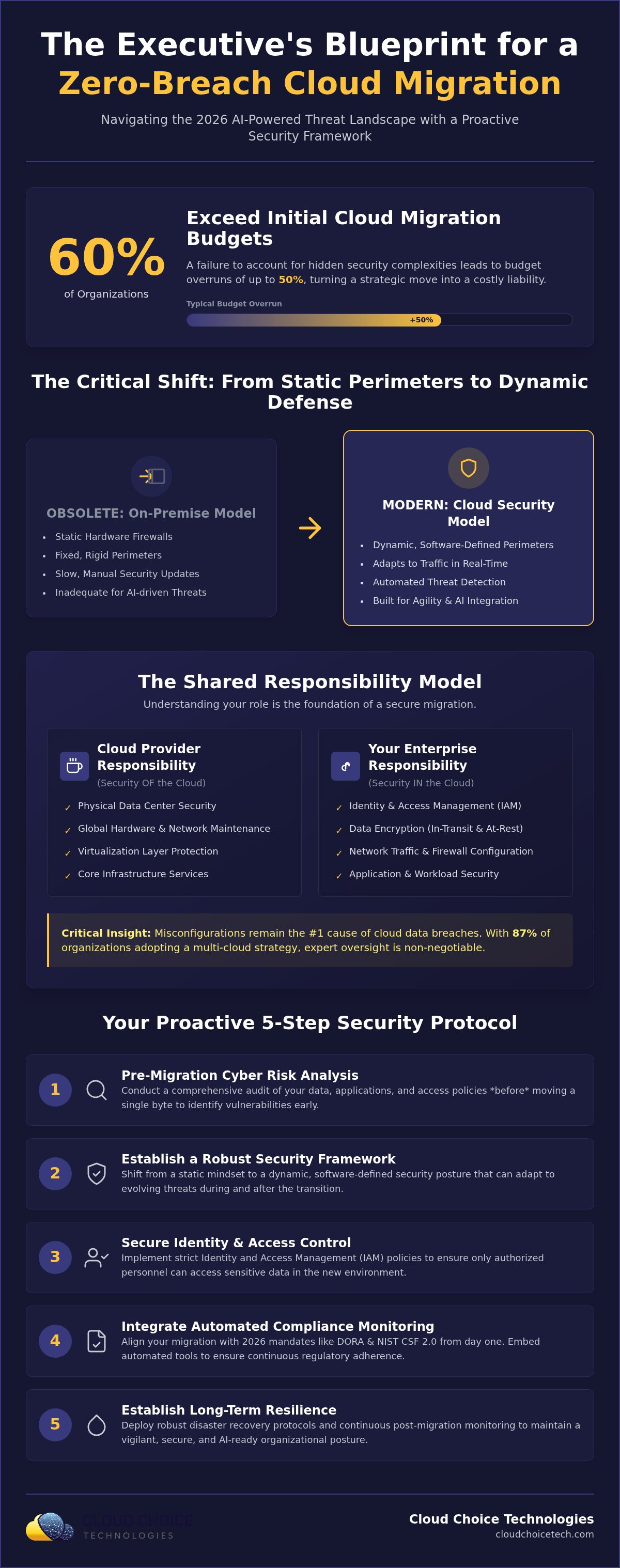
Sixty percent of organizations exceed their initial cloud migration budget by as much as 50 percent, usually because they failed to account for the hidden complexities of a modern digital transition. It's a staggering figure that highlights a critical truth: moving your data isn't just a technical shift; it's a high-stakes security evolution. You recognize that the cloud is necessary for growth, but you're likely concerned about operational downtime and the rising tide of AI-powered cyber threats. Integrating expert cloud migration security services from the start is the only way to transform that anxiety into a clear, strategic advantage.
We understand the pressure to maintain total continuity while meeting rigorous 2026 standards like DORA and NIST CSF 2.0. This guide provides a masterclass in proactive transition management, promising you a zero-breach migration that keeps your corporate assets under a vigilant watch. You'll learn how to navigate the shared responsibility model, align with HIPAA or SOC2 requirements, and deploy a security framework that's built for an AI-driven landscape. From cyber risk analysis to post-migration monitoring, we're outlining the exact steps to ensure your move is both silent and successful.
Key Takeaways
- Shift your perspective from static on-premise perimeters to dynamic, software-defined cloud security to maintain total data integrity during the transition.
- Clarify the Shared Responsibility Model immediately to ensure your team understands exactly where the provider's obligations end and your data protection duties begin.
- Utilize expert cloud migration security services to conduct a comprehensive cyber risk analysis before moving a single byte of corporate data.
- Establish a foundation for long-term resilience by integrating automated compliance monitoring and robust disaster recovery protocols into your new cloud environment.
- Ensure your migration strategy aligns with 2026 regulatory mandates like DORA and NIST CSF 2.0 to maintain a secure, AI-ready organizational posture.
Understanding Cloud Migration Security Services in 2026
Cloud migration security is much more than a technical checklist for moving files. It's a comprehensive strategy designed to move complex workloads while maintaining absolute data integrity and availability. In 2026, the traditional on-premise security model has become obsolete. We've moved from static hardware firewalls to dynamic, software-defined perimeters that adapt to your traffic in real time. This evolution requires a deep mastery of cloud security fundamentals to ensure your digital assets remain protected as they cross from your local servers to the cloud.
Why do executives still feel a sense of dread during this transition? The anxiety often stems from the outdated "lift and shift" method. Simply replicating your current environment in a cloud setting is no longer sufficient. Modern business drivers, specifically the need for extreme agility and seamless AI integration, demand a state of elite readiness. You aren't just changing where your data lives; you're changing how your business survives in a digital-first economy. Professional cloud migration security services provide the framework to make this change without compromising your operational stability.
The Evolving 2026 Threat Landscape
AI-powered cyber threats have accelerated the pace of cloud-based attacks to a level we've never seen before. Automated vulnerability scanning can now identify a misconfigured cloud bucket in seconds, not hours. During a migration, "shadow IT" often becomes a major liability. When individual departments move data too quickly without central oversight, they create massive security blind spots. Proactive oversight is the only effective counter to automated ransomware. You need a partner that monitors every byte in transit, ensuring that speed never comes at the expense of safety.
The Business Value of Secure Migration
Secure cloud technology solutions are a foundational element of your corporate success. They move beyond simple utility to drive long-term efficiency and scalability. The cost of failure is high. A single migration-related data breach can result in financial losses that far outweigh the initial project budget. By leveraging managed IT services as your foundation, you gain the peace of mind that comes with a vigilant, fast-acting security partner. This proactive approach ensures your migration is a springboard for growth rather than a source of digital uncertainty.
The Shared Responsibility Model: Establishing Your Security Foundation
The most dangerous assumption an executive can make is that the cloud provider handles every aspect of your defense. It's a partnership, not a total handoff. This is the core of the Shared Responsibility Model. While giants like AWS or Azure secure the physical data centers and global infrastructure, you remain legally and operationally responsible for the data living inside those systems. Professional cloud migration security services are essential because they bridge the gap between provider capabilities and your specific corporate requirements.
Misconfigurations remain the leading cause of cloud data breaches in 2026. This usually happens when project speed takes precedence over technical precision. A single open port or an improperly configured storage bucket can expose your entire database to the public internet in seconds. You need a vigilant, always-on partner who manages the "in-the-cloud" security layer with surgical accuracy. It's about maintaining total control over a complex, moving target.
Defining Provider vs. Enterprise Duties
The division of labor is clear but increasingly complex. The provider manages physical security, global hardware maintenance, and the virtualization layer. Your enterprise must handle Identity and Access Management (IAM), data encryption, and network traffic protection. This becomes even more difficult in hybrid environments where data moves between local servers and multiple cloud platforms. To navigate these complexities, many organizations look to CISA's technical reference architecture for a validated roadmap. Since 87% of organizations now adopt a multi-cloud strategy, managing these overlapping duties requires elite readiness and constant foresight.
Aligning with Regulatory Compliance
Compliance isn't a one-time event; it's a continuous state of operation. In 2026, regulations like the Digital Operational Resilience Act (DORA) mandate real-time risk monitoring and strict incident notification timelines. If you're in healthcare or finance, ensuring your migration meets regulatory compliance IT support standards is non-negotiable. This includes managing AI compliance, as modern frameworks now scrutinize how automated systems process sensitive data. If you're feeling overwhelmed by these shifting requirements, you might want to consult with a security expert who can stabilize your transition and provide immediate peace of mind.
How to Execute a Secure Cloud Migration: A Step-by-Step Security Protocol
Execution is where strategic planning meets operational reality. To avoid the budget overruns that impact 60% of organizations, you need a roadmap that treats security as a foundational requirement rather than a final step. This protocol ensures your move is methodical, transparent, and resilient. By utilizing professional cloud migration security services, you can transition complex workloads without the fear of systemic downtime or data exposure. It's about moving with speed while maintaining total control.
Step 1: Pre-Migration Cyber Risk Analysis
Before moving a single byte of data, you must conduct a thorough audit of your existing workloads. This phase identifies hidden vulnerabilities in legacy systems that could be exploited once they hit the public cloud. Data classification is vital here; you must determine which assets require the highest levels of encryption and which can be retired. Poor data quality costs organizations an average of $12.9 million annually. A rigorous pre-migration audit helps mitigate these costs by ensuring you only migrate clean, secure, and necessary data. This step alone drastically reduces your eventual attack surface by eliminating technical debt before the cutover begins.
Step 2: Implementing Identity and Access Management (IAM)
Zero Trust is the mandatory standard for 2026. You must operate under the principle of "never trust, always verify" to prevent unauthorized lateral movement within your new environment. Setting up "Least Privilege" access ensures that users only have the permissions necessary for their specific roles. Multi-factor authentication (MFA) is non-negotiable for securing administrative cloud consoles. With 87% of organizations now managing multi-cloud strategies, automating your access reviews is the only way to prevent "permission creep" from creating security gaps over time.
Step 3: End-to-End Encryption and Monitoring
Protecting data in transit and at rest requires enterprise-grade encryption protocols that remain robust against modern decryption attempts. During the critical cutover phase, you need vigilant 24/7 monitoring to intercept threats in real time. As AI-related cloud spending now accounts for 19% of total cloud budgets, your defense must keep pace. Integrating detection systems that can spot AI-powered cyber threats allows you to neutralize zero-day exploits before they impact your operations. If you want to ensure your transition is handled by a team of specialized experts, contact us for a comprehensive cyber risk analysis to secure your digital future.
Beyond the Migration: Maintaining Long-Term Cloud Resilience
Security isn't a destination you reach; it's a continuous state of operation. Once your data settles into its new environment, the real work of maintaining resilience begins. The 2026 threat landscape doesn't pause just because your migration is complete. In fact, attackers often wait for the post-migration "settling period" to look for overlooked gaps. Professional cloud migration security services ensure that your initial transition success evolves into a permanent, proactive defense strategy. It's about moving from a project mindset to a vigilant, always-on posture.
A resilient cloud environment requires more than just technical settings. It demands a culture of security awareness that spans your entire distributed workforce. When every employee understands their role in data protection, your technical defenses become significantly more effective. You've built a sophisticated digital infrastructure. Now, you must ensure it remains a foundational element of your corporate success rather than a source of digital uncertainty.
The Role of Managed Cloud Security Services
Outsourcing your ongoing defense to managed cloud security services provides the elite readiness necessary to stay ahead of automated threats. A dedicated partner handles the heavy lifting of rapid technical assistance and continuous patch management. This isn't just about utility; it's about foresight. Ongoing AI compliance monitoring prevents regulatory drift, ensuring your systems stay aligned with mandates like DORA or NIST CSF 2.0 without requiring constant manual oversight. We act as the calm in the storm, managing the complexities of the digital world so you don't have to.
Ensuring Continuous Business Performance
True resilience is the result of rigorous, repeated testing. You must integrate your cloud technology solutions with a comprehensive business continuity and disaster recovery plan. Regular "fire drills" and deep-dive security audits are the only ways to verify that your defenses will hold during a real crisis. These tests prove your capability and provide immediate peace of mind to your stakeholders. When you partner with a vigilant guardian, you replace the stress of operational downtime with professional confidence. Secure your future with a partner who treats your business continuity as their primary mission.
Secure Your Digital Future Today
The transition to the cloud is a defining moment for your organization's resilience. By mastering the shared responsibility model and implementing a zero-trust architecture, you eliminate the uncertainty that often plagues complex digital transformations. Professional cloud migration security services provide the oversight necessary to protect your corporate assets while ensuring total alignment with 2026 regulatory standards. You don't have to navigate these high-stakes complexities alone.
Cloud Choice Technologies serves as your vigilant partner, offering 24/7 monitoring and specialized AI compliance frameworks to stabilize your operations. We provide the fast-acting technical support required to maintain momentum during the most critical phases of your migration. Our goal is to handle the technical intricacies so you can focus on your core business objectives with absolute confidence.
Secure your enterprise with Cloud Choice Technologies’ expert migration services. Your move to the cloud should be a springboard for growth, not a source of stress. We're ready to ensure your transition is seamless and your future is secure.
Frequently Asked Questions
What are the most common security risks during a cloud migration?
Misconfigurations and insecure APIs are the most frequent risks encountered during a digital transition. When organizations prioritize speed over technical precision, they often leave storage buckets open to the public internet or fail to secure data in transit. These oversights create immediate vulnerabilities that automated scanners can exploit in seconds, leading to unauthorized data exposure.
How does the shared responsibility model affect my business liability?
The shared responsibility model dictates that while the provider secures the physical infrastructure, your organization remains legally liable for data protection and access control. Failing to secure the "in-the-cloud" layer can lead to significant regulatory fines and lasting reputational damage. You must maintain total control over encryption and identity management to fulfill your side of the security contract.
Can my existing compliance certifications (like HIPAA) transfer to the cloud?
Compliance certifications like HIPAA or SOC2 don't automatically transfer; you must re-verify that your new cloud configuration meets these rigorous standards. While providers offer compliant infrastructure, your specific implementation determines your final status. Professional cloud migration security services ensure your new environment is built to satisfy auditors and maintain regulatory alignment from day one.
How do AI-powered cyber threats impact cloud migration security in 2026?
AI-powered cyber threats have drastically increased the speed and scale of attacks against migrating workloads. Automated tools can now identify misconfigurations and execute ransomware payloads almost instantly. To counter these risks, you need a defense strategy that utilizes real-time monitoring and proactive intervention to neutralize threats before they can impact your operational stability.
Is it safer to migrate all at once or in phases?
A phased migration is generally the safer approach because it allows for granular security testing and risk mitigation at every stage. Moving everything at once often leads to operational blind spots and unmanageable complexity. By migrating in waves, you can stabilize each workload and ensure total continuity before proceeding to the next phase of the project.
What is the role of a managed service provider in cloud migration security?
A managed service provider acts as a vigilant partner that handles the complex technical oversight required for a secure transition. They provide the "calm in the storm" by offering 24/7 monitoring, rapid technical assistance, and specialized AI compliance frameworks. Utilizing cloud migration security services ensures your internal team can focus on growth while experts maintain a zero-breach environment.