Business IT Consulting Costs in West Palm Beach
The lowest estimate can become the costliest choice if it leaves important work out of scope. The cost of business IT consulting for your organization depends on what you need, from technology planning and risk analysis to support for specific projects. A quote reflects the scope and relevant cost factors after a quote request.
It’s reasonable to want a clear budget before committing. Compare estimates on equal terms: what each includes, how the scope is defined, and whether the recommendations fit your business priorities. This guide explains the factors that shape consulting costs, how to compare estimates, and how to plan a technology budget with fewer surprises.
You’ll also learn to distinguish strategic advice from project implementation and ongoing support, so you can match the work to the need. A clearer view of scope, priorities, and expected outcomes helps you make a considered decision about technology spending.
Key Takeaways
- Define the business decision or technology problem first so consulting recommendations and project scope stay focused.
- Compare estimates by the work included, deliverables, timelines, and assumptions, not by the bottom-line figure alone.
- Separate one-time project needs from ongoing support and security priorities when building a technology budget.
- Prioritize spending according to operational needs, risk, and the outcomes each recommendation is expected to support.
- Use a clear view of your current systems and business goals to decide whether consulting, ongoing support, or cybersecurity help is the right next step.
Business IT consulting and technology advisory
Business IT consulting connects technology decisions to specific operating goals. Begin with a conversation involving the owner, manager, or business partners. Identify priorities such as expanding operations, protecting customer records, or reducing delays in order processing. These goals shape the questions an advisor asks and the work included in an estimate. Without a defined objective, recommendations may address technology without solving the business problem.
Next, connect each goal to a practical outcome. A business preparing to grow might need systems that support more staff, while a professional firm may prioritize secure handling of client information. Document current constraints, required capabilities, and who will make decisions. This gives you a basis for comparing options and keeps recommendations tied to business strategy, not just a technology purchase.
A technology assessment establishes what the business currently uses and where gaps exist. Review systems, devices, user access, network dependencies, support processes, and data handling, then compare the findings with operational needs. For example, if employees rely on one shared workstation, record how that affects workflow and access. A gap analysis separates urgent problems from improvements that can be planned later.
Assessment findings also explain the work behind a consulting estimate. Replacing an outdated system may require planning, migration, testing, and staff coordination, not just selecting new equipment. Ask for project options with defined scope, costs, timeframes, and likely return on investment. Clear deliverables make it easier to see what the business will receive and which assumptions affect the estimate.
Risk and compliance planning connects technical gaps to business exposure. Identify sensitive information, who can access it, and how the organization handles it. Then prioritize safeguards based on risks and relevant compliance needs. Requirements vary by industry and business activity, so connect each control to an applicable obligation or operational concern. A risk analysis can turn broad concerns into specific priorities, owners, and planned actions.
Finally, align the roadmap with available resources. Separate immediate remediation from longer-term improvements, then assign each item an owner and review point. For instance, address excessive account access before a wider systems upgrade if access poses the more pressing risk. This sequence helps decision-makers weigh urgency, business impact, dependencies, and cost. The result is a technology plan that supports strategy, identifies gaps, and gives estimates a clear, reviewable basis.
Comparing prices and cost estimates
Business IT consulting costs depend on the work required, its complexity, and the expected deliverables. A focused technology review differs from a project involving several systems, staff groups, or compliance needs. Your exact figure depends on your case and is provided in a quote for that work.
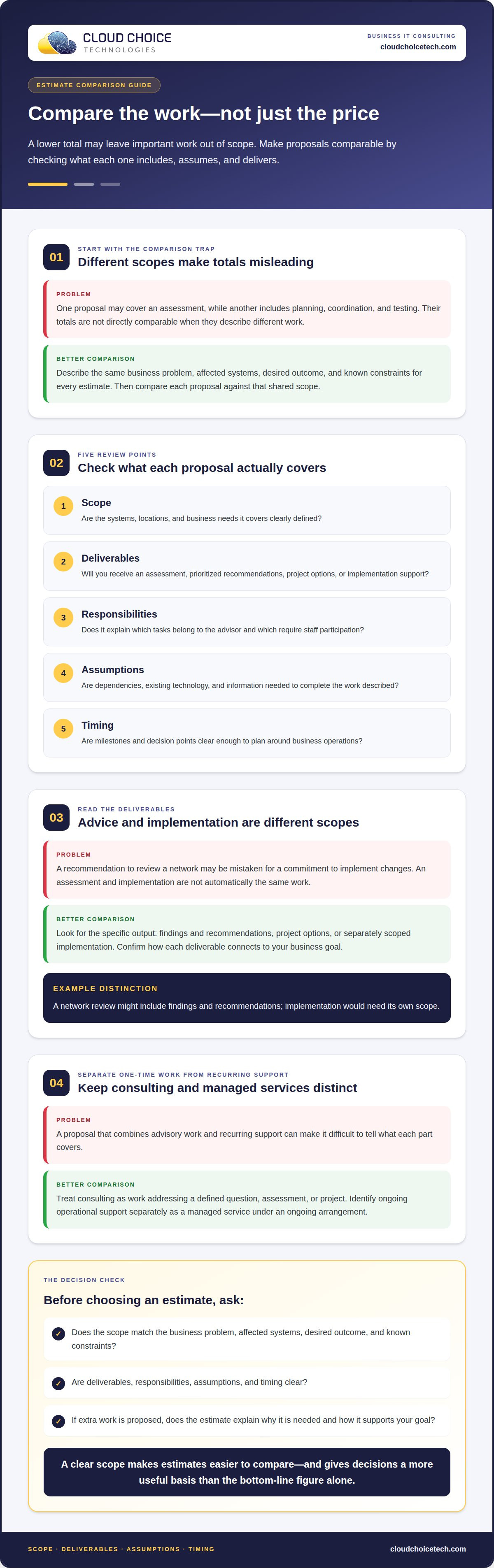
Compare proposals by scope before comparing totals. A useful estimate explains which tasks are included, what the business will receive, and what assumptions shape the work. For example, a network review might include findings and recommendations, while implementation would need its own scope. If estimates describe different work, their totals aren’t directly comparable.
Use the same review points for each estimate:
- Scope: Does the proposal define the systems, locations, and business needs it covers?
- Deliverables: Will you receive an assessment, prioritized recommendations, project options, or implementation support?
- Responsibilities: Does it explain which tasks belong to the advisor and which require staff participation?
- Assumptions: Does the estimate describe dependencies, existing technology, or information needed to complete the work?
- Timing: Are milestones and decision points clear enough to plan around business operations?
These distinctions explain why two proposals can differ without either being inherently better. A business that needs advice about access controls and a system upgrade might receive one estimate for an assessment and another that includes planning, coordination, and testing. Compare the deliverables with your actual needs before deciding which scope fits.
Also distinguish consulting from a managed service. Consulting generally addresses a defined question, assessment, or project. A managed service provides ongoing operational support under an ongoing arrangement. If a proposal combines both, separate the advisory tasks from recurring support to see what each part covers.
To make the comparison useful, define a shared scope before reviewing options. Describe the business problem, affected systems, desired outcome, and known constraints. Then evaluate each proposal against that description. If a recommendation introduces additional work, check whether it explains why the work is needed and how it relates to your goal. This keeps priorities visible and reduces confusion about scope differences.
Finally, assess how the proposal connects findings to decisions. A practical estimate should explain how the advisor will document options, define the work, and identify expected outcomes. For compliance-related needs, look for a clear description of planning tasks and the business requirements they address. A precise scope gives decision-makers a sound basis for approving work and planning next steps.
IT budgeting and cost planning
A technology budget works best when each planned expense supports a business priority. Group needs into essential operations, risk reduction, and planned growth. For example, a business preparing to add employees may need to plan for additional accounts, equipment, and support. A firm handling sensitive client information may prioritize security and compliance work. These categories clarify which investments protect current operations and which prepare the business for change.
Separate one-time project work from recurring costs. A system upgrade may involve planning, implementation, testing, and staff coordination. Ongoing support and security services belong in recurring budget lines, not as a one-time project. This distinction helps leaders see whether an expense affects one budget period or creates an ongoing commitment. It also makes it easier to adjust plans as business needs change.
Set priorities using business impact, urgency, dependencies, and risk. If an outdated system blocks a required business process, address that constraint before adding optional features. If access controls create a security concern, factor that work into the plan before lower-priority upgrades. A roadmap can assign each initiative an owner, target period, and reason for investment. That record helps decision-makers revisit priorities when circumstances shift.
Leadership capacity is another planning consideration. That annual cost offers a useful point of comparison when weighing executive technology guidance against other planning models. The right choice depends on the responsibilities the business needs covered, such as setting priorities, coordinating projects, or connecting technology decisions to business goals. Avoid comparing roles by title alone; compare the scope of work and expected contribution.
Build the budget in stages instead of treating every recommendation as equally urgent. First, identify work needed to keep core operations reliable. Next, schedule improvements that reduce risk or address compliance needs. Then plan growth projects around business timing and available resources. For example, a company expecting a major process change can align technology work with it rather than fund disconnected upgrades. This sequence makes tradeoffs visible and supports deliberate decisions.
An affordable plan fits the work to your priorities and resources, rather than automatically choosing the smallest proposal. A limited scope can be appropriate when it resolves a clearly defined issue, but may not suit a project with several dependencies or broader security needs. Record what each initiative includes, the outcome it supports, and any future work it may require. That keeps the budget useful beyond approval day.
Review the plan at regular decision points, such as before approving a project or changing a system. Compare planned work with current business needs, open risks, and scheduled initiatives. If a new requirement shifts priorities, update the roadmap and explain which work moves. This disciplined process turns budgeting into an active management tool, directing resources toward the technology decisions that matter most.
Business IT consulting in West Palm Beach
Before hiring a West Palm Beach IT consultant, ask what business outcome the work will support, how the assessment will proceed, and what deliverables you’ll receive. Clarify how recommendations account for your existing systems, business risks, and relevant compliance needs. These questions reveal whether the proposed work addresses your local priorities or simply recommends a technology purchase.
Ask how the West Palm Beach consultant handles vendor relationships. A vendor-neutral approach puts business priorities ahead of a particular product or provider. If your local team is considering a new platform, for example, ask how options will be compared with current workflows, security needs, and future plans. Clear reasoning helps you understand why a recommendation fits, not just what a vendor proposes.
Ask who will contribute to the assessment and how findings become recommendations. A practical process starts with a discussion involving the West Palm Beach business owner, manager, or partners. After learning about your operations, the consulting team can meet with key staff to exchange information and develop ideas. This connects leadership goals with day-to-day needs, such as staff access to business applications.
Test expertise against your specific challenge. If your West Palm Beach organization needs stronger data protection, ask how the assessment identifies and ranks risks, then translates findings into planned actions. If the priority is a technology decision, ask how options will be evaluated against operational requirements. Relevant examples should explain the problem, reasoning, and type of deliverable without exposing confidential details.
Clarify how the consultant will work with your local team. Ask what information staff need to provide, which decisions require leadership input, and how progress will be communicated. A West Palm Beach business with a small administrative team, for example, may need a clearly identified point of contact and a process that avoids disrupting essential work. Defined responsibilities reduce confusion during assessment and follow-through.
Finally, ask how recommendations will be prioritized. A useful plan distinguishes immediate risks from improvements that can be scheduled around business operations. A West Palm Beach company facing an access-control concern, for example, may need to address it before a planned application change. Ask how the consultant will explain dependencies, expected outcomes, and the reasoning behind each proposed step. This makes advice easier to evaluate and act on.
Use these questions to judge whether the process fits your organization, not just whether a vendor’s pitch sounds persuasive. A focused discussion can help define the problem and identify the right next decision. As you shape that plan, explore Cloud Choice Technologies for specialized business technology consulting.
Cloud Choice Technologies
Cloud Choice Technologies helps businesses connect technology decisions with operational needs and security priorities. When you’re assessing risk, planning support, or clarifying which needs should come first, its Cyber Risk Analysis can help identify areas requiring attention. Managed IT Services, Cybersecurity, and Remote Support address ongoing technology and protection needs once priorities are clearer.
A useful next step is to outline the business issue, the systems involved, and the outcome you need. That gives the discussion a practical starting point and helps connect your planning questions to the right kind of support. If your needs include ongoing technology management, explore managed IT services.
Contact Cloud Choice Technologies to discuss your business technology needs.
Put your technology plan into motion
The cost of business IT consulting in West Palm Beach becomes easier to evaluate when you connect each decision to a business priority. Choose the issue that most needs attention, identify the outcome you want, and use that as the starting point for a focused conversation. A clear objective helps turn technology uncertainty into practical next steps.
Cloud Choice Technologies provides Managed IT Services, Cybersecurity, and Remote Support to help businesses address ongoing technology and protection needs. The right fit depends on whether your priority is day-to-day support, stronger security, or both. Start a conversation to clarify which needs belong in your plan and how to approach them.
Take the next step when you’re ready to discuss your business’s technology priorities. Contact Cloud Choice Technologies to start the conversation and move forward with greater clarity.
Frequently Asked Questions
What is the average hourly rate for business IT consulting?
There isn’t one hourly rate that fits every consulting engagement. The work’s complexity, systems involved, expertise required, and deliverables all affect an estimate. Reviewing one business process differs from investigating connected systems or planning a significant change. For a useful comparison, define the issue and expected outcome, then assess whether each proposal includes the same tasks and responsibilities.
What affects monthly costs for managed IT services?
Monthly costs depend on the scope of ongoing support and the technology environment being managed. Relevant factors include users, devices, system complexity, security needs, and support responsibilities. A business with several locations or specialized applications, for example, may need a different scope than an office with simpler systems. Compare included services and exclusions before evaluating ongoing agreements, so the proposed coverage matches your operational needs.
How are one-time support or troubleshooting charges determined?
One-time support charges depend on the issue, investigation required, and work needed to resolve it. One user’s access problem differs from troubleshooting a network disruption affecting several business systems. The estimate may also depend on whether the work involves diagnosis alone or additional remediation. Describe the symptoms, affected systems, and business impact so the proposed scope reflects the problem.
How do IT consulting prices differ between markets?
Location alone doesn’t explain every difference between consulting estimates. Scope, system complexity, required expertise, travel needs, and deliverables can all affect a proposal. Compare descriptions of the work rather than assuming providers in different markets use identical pricing. An assessment limited to one office, for instance, may differ from planning across several locations. Ensure proposals address comparable requirements before drawing conclusions about regional differences.
What affects the cost of small-business cybersecurity consulting?
Cybersecurity consulting costs depend on the systems reviewed, depth of risk analysis, and the business’s security and compliance priorities. An assessment focused on account access differs from work that also evaluates networks, sensitive information, and response planning. A business handling regulated or confidential data may need a broader review. Defined priorities help establish which risks the engagement examines and what findings or recommendations it should deliver.
Do IT consultants charge per user, per device, or a flat monthly fee?
Billing structures vary by provider and engagement. Ongoing support may be priced around users, devices, or a defined monthly scope, while consulting projects may use a separate project-based or time-based estimate. The right structure depends on the work included and how the business uses its systems. Before choosing a model, review how changes in users, devices, locations, or project tasks affect the agreement.