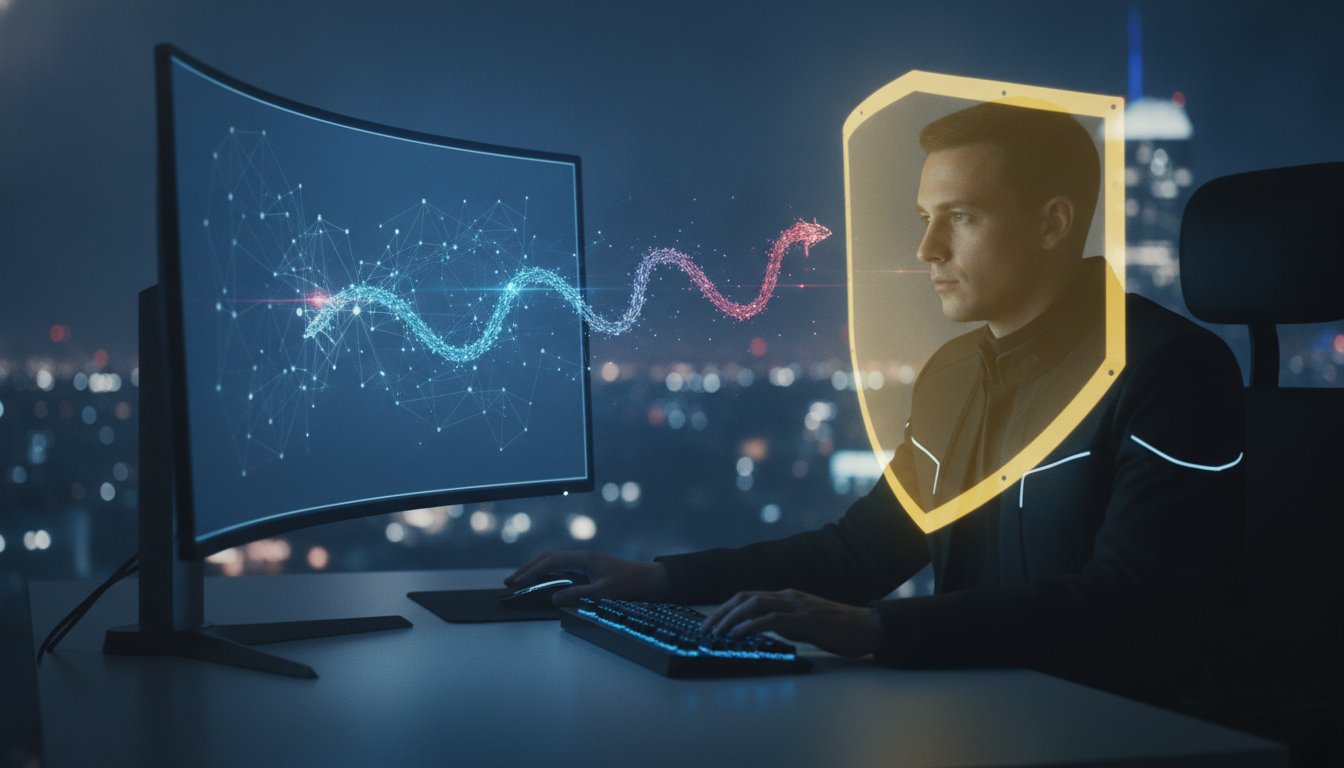
AI-Era Phishing Simulation: Employee Defense Guide
With 82.6% of phishing attacks now generated by AI, the margin for human error has never been smaller. In 2026, the human element remains a factor in 62% of all data breaches, often because traditional training hasn't kept pace with sophisticated, automated threats. You've likely felt the stress of rising click rates and the pressure to implement a more effective phishing attack simulation for employees. It's a high-stakes environment where one wrong click can lead to a breach costing an average of $4.88 million. We are here to help you regain control and protect your operations with professional confidence.
This guide will teach you how to design and execute high-fidelity simulations that transform your team from a perceived vulnerability into your most reliable line of defense. You'll learn how to move beyond simple "gotcha" tests to create a data-driven culture of elite readiness. We will provide a clear roadmap for continuous training that satisfies strict cyber insurance requirements and delivers measurable reductions in real-world security incidents. Let's turn your workforce into a vigilant, fast-acting partner in your organization's ongoing success.
Key Takeaways
- Understand how AI-driven spear phishing has rendered traditional scams obsolete and why modern simulations are now a regulatory necessity for elite readiness.
- Master the three-phase approach to a phishing attack simulation for employees, from establishing a vulnerability baseline to selecting realistic payloads like credential harvesting.
- Learn to leverage "teachable moments" to provide instant, non-punitive feedback that fosters a proactive "see something, say something" security culture.
- Shift your focus from simple click rates to advanced metrics like report rates and time-to-report to demonstrate clear ROI to your board.
- Discover how to integrate simulation data into a comprehensive cyber risk analysis to continuously refine and harden your organization’s security posture.
Table of Contents
-
The Evolution of Social Engineering: Why Phishing Simulations are Mandatory in 2026
-
Step-by-Step: Designing a High-Fidelity Phishing Simulation Campaign
-
Executing the Campaign: Best Practices for Employee Engagement
The Evolution of Social Engineering: Why Phishing Simulations are Mandatory in 2026
Traditional security perimeters are no longer enough to protect your business. While firewalls and filters are essential, they can't stop a threat that's invited in by a trusted user. A modern phishing attack simulation for employees is a controlled, benign exercise designed to test and train human responses in a safe environment. This Simulated phishing overview explains how these programs bridge the gap between technical defense and human intuition. We've moved far beyond the era of generic scams with obvious spelling errors. Today's threats are precise, automated, and devastatingly effective.
The financial stakes of a single error are absolute. With the average cost of a data breach now reaching $4.88 million, the "human element" remains a factor in 62% of security incidents. A single clicked link can lead to total operational downtime or a ransomware event that threatens your company's survival. You need a defense strategy that accounts for the fact that hackers don't always break in; often, they simply log in using stolen credentials.
AI-Powered Threats: The New Frontier of Deception
Attackers now use Large Language Models (LLMs) to craft hyper-personalized spear phishing emails at an unprecedented scale. These tools eliminate the grammatical "red flags" of the past and perfectly localize tone to match your corporate culture. We are also seeing a surge in vishing attacks that use deepfake audio to mimic executive voices during wire transfer requests. Adversarial machine learning is the practice of using AI to analyze and bypass the specific security filters or psychological triggers that your employees use to identify suspicious content.
The Compliance Imperative: Cyber Insurance and Regulatory Standards
Regulators and insurers have recognized that static training is obsolete. Updated standards like NYDFS Part 500 now explicitly require phishing simulations as part of a robust cybersecurity program. Implementing a regular phishing attack simulation for employees is now a prerequisite for maintaining coverage and proving behavioral improvement to auditors. Moving from "check-the-box" compliance to demonstrable readiness is vital. By linking your simulation data to your broader regulatory compliance IT support, you ensure that your business remains both protected and insurable in an increasingly volatile digital world.
Step-by-Step: Designing a High-Fidelity Phishing Simulation Campaign
Designing a phishing attack simulation for employees requires more than just sending a random email. It's a methodical process. You're mirroring actual adversary behavior to ensure your defenses are battle-tested. Start with a Phase 1 Baseline Assessment. This establishes your organization's current vulnerability level before any training occurs. Without this data, you can't measure progress or prove ROI to the board. It's the foundation of a proactive security posture.
Phase 2 involves Payload Selection. Choose realistic scenarios such as Credential Harvesting, Malware Attachments, or Drive-by URLs. In Phase 3, move to Target Segmentation. A "Late Invoice" template is highly effective for Finance. It will likely be ignored by your Creative teams. Finally, Phase 4 introduces Multi-Channel Execution. Real attackers don't stop at email. They use SMS (smishing) and voice (vishing) to create a 360-degree pressure campaign, a gap often left unaddressed by standard training programs.
Selecting the Right 'Hook': Industry-Specific Scenarios
Credibility is the currency of a successful simulation. Use internal brand elements like logos and specific email signatures to test "Impersonation" resilience. This phishing simulation training guide emphasizes the need for realism without creating genuine panic. You want to create a sense of urgency that prompts a security report, not a call to emergency services. Precision in your scenarios ensures the training is relevant and respected by your staff.
Technical Configuration and Safe Execution
Safety is paramount. All "malicious" payloads must be benign, ensuring no actual risk to your network. You'll need to whitelist simulation IPs so they aren't blocked by spam filters before they reach the target. Setting up "Look-alike" domains that mimic your corporate infrastructure adds the final layer of realism needed for a high-fidelity phishing attack simulation for employees. This controlled environment allows you to identify vulnerabilities without exposing the business to actual downtime.
Establishing these technical guardrails provides peace of mind while you gather critical data. Integrating these results into a comprehensive cyber risk analysis allows you to refine your security posture with professional excellence and foresight.
Executing the Campaign: Best Practices for Employee Engagement
Execution is where your technical strategy meets human behavior. A successful phishing attack simulation for employees isn't a "gotcha" exercise; it's a high-stakes training event. The most critical component is the "Teachable Moment." This is the immediate, non-punitive feedback delivered the second a user clicks a simulated link. By providing instant insight, you replace the stress of failure with the confidence of knowledge. This immediate loop is a core recommendation within CISA's anti-phishing training program, which emphasizes behavioral change over simple compliance.
Building a "See Something, Say Something" culture requires more than just warnings. It requires positive reinforcement. When an employee uses the "Report Phish" button, acknowledge it. This transforms the workforce into a vigilant sensor network. Dealing with repeat offenders requires a delicate, professional touch. If an individual consistently fails, it indicates a training gap rather than a lack of loyalty. We handle these situations by providing targeted, one-on-one sessions that build competence without damaging morale or corporate trust.
Just-in-Time Training: Turning Failure into Insight
Effective landing pages are the heart of your response strategy. They must explain exactly what the user missed in under two minutes. Long, clinical modules lead to frustration and lower retention. Focus on highlighting specific red flags like mismatched URLs, spoofed sender addresses, or threatening language. This rapid intervention ensures that the lesson sticks without disrupting the flow of the workday. We believe that elite readiness is built through these small, consistent moments of clarity.
Gamification and Positive Security Culture
Healthy competition can drive significant improvements in reporting rates. Use department leaderboards to reward the teams that identify threats the fastest. A Security-First Culture is a foundational element of corporate success where every team member views themselves as a vital guardian of the organization's digital continuity. This proactive approach ensures your business remains resilient against even the most sophisticated AI-driven threats. To see how these simulations fit into a wider strategy, explore our managed cybersecurity services today.
Measuring Success: Scaling Your Organizational Protection
Click rates are a starting point; reporting rates are the goal. While many organizations focus solely on how many people clicked a link, this metric alone is insufficient. A truly effective phishing attack simulation for employees measures the "Report Rate" and "Time to Report." If an employee identifies a threat and reports it within seconds, they've successfully activated your internal alarm system. This rapid response can be the difference between a minor incident and a total system shutdown. High reporting rates indicate a resilient, engaged culture that functions as a human sensor network.
We integrate this data directly into your broader cyber risk analysis to provide a clear picture of your security posture. During Quarterly Business Reviews (QBRs), we present these metrics as proof of ROI to your executive board. Executives need to see more than just "training completed" checkboxes. They need to see a measurable reduction in human risk. By embedding simulation results into your Managed IT service framework, we ensure that your defenses evolve as quickly as the threats do.
From Data to Defense: Refining Your Security Posture
Data from your simulations should drive technical changes. If a specific department consistently shows high failure rates, it indicates a need for stricter technical controls, such as mandatory hardware-based MFA or more aggressive email filtering. As your workforce becomes more sophisticated, we increase the difficulty of the simulations. This ensures your team stays sharp against "zero-day" social engineering tactics. Linking human risk data with endpoint protection and network monitoring creates a unified, multi-layered defense strategy that leaves no room for uncertainty.
The Role of a Managed Security Partner
Managing a high-fidelity phishing attack simulation for employees in-house is a significant operational burden. Outsourcing this to a managed security partner ensures that your payloads are always expert-level and reflect the latest AI-driven tactics. We provide the objective, third-party reporting required for rigorous compliance audits and cyber insurance renewals. This level of oversight removes the stress of administration while providing total control over complex digital risks. Ready to secure your workforce? Contact Cloud Choice Technologies for a comprehensive Cyber Risk Analysis today.
Achieving Elite Readiness in the AI Era
The digital landscape of 2026 demands more than just passive filters. It requires a workforce that is trained, tested, and ready to act. You've seen how AI-driven spear phishing has eliminated old red flags and how multi-channel attacks now target your team from every angle. Implementing a robust phishing attack simulation for employees ensures that your staff becomes a vigilant sensor network. This proactive shift doesn't just reduce risk; it ensures your business remains compliant and insurable in an increasingly volatile environment.
Our specialized AI security consultants are ready to handle these technical complexities so you don't have to. We provide national managed IT and cybersecurity expertise with a focus on vigilant, proactive organizational protection. You can replace digital uncertainty with the peace of mind that comes from a professional, always-on partner. We are committed to your digital continuity and success.
Secure your business with a professional Cyber Risk Analysis and Phishing Simulation plan today.
The human element is your greatest asset when properly prepared. It's time to turn potential vulnerabilities into your strongest line of defense.
Frequently Asked Questions
Can phishing simulations be done without notifying employees in advance?
Yes, unannounced simulations provide the most accurate data regarding your real-world vulnerability. While you don't need to notify the general staff, your executive team and internal IT department must be fully informed to avoid unnecessary incident response. This approach allows you to capture genuine employee reactions and identify specific training gaps without the bias of "test-day" behavior.
How often should a business run phishing simulations for its staff?
We recommend conducting simulations at least once per quarter to ensure elite readiness. High-risk sectors often benefit from monthly exercises to keep pace with rapidly evolving AI threats. Continuous testing is vital because security awareness can reduce employee susceptibility to phishing to under 5%, but these skills degrade without regular reinforcement and vigilant oversight.
Is it possible for a phishing simulation to accidentally infect our network?
A professionally managed phishing attack simulation for employees is completely safe because it uses benign payloads. These simulations track user interactions without ever introducing actual malware or ransomware to your environment. You get the benefit of high-fidelity testing and deep insight into your security posture without any risk of digital uncertainty or operational downtime.
What should I do if a high-level executive fails a phishing simulation?
Use executive failure as a catalyst for specialized, one-on-one training sessions rather than disciplinary action. High-level leaders are frequently targeted by "whaling" attacks that use sophisticated deepfake audio or AI-generated emails. Providing them with advanced coaching ensures they can lead by example while protecting the organization's most sensitive access points from elite-level adversaries.
How do phishing simulations help with cyber insurance premiums?
Proof of a regular phishing attack simulation for employees is often a mandatory requirement for modern cyber insurance policies. Underwriters use your reporting rates and click-through data to assess your organizational risk level. Maintaining a consistent simulation schedule demonstrates the rigorous standards and comprehensive oversight that insurers look for when determining your premiums and coverage eligibility.
What are the most common phishing themes used in 2026 simulations?
The most effective 2026 themes involve hyper-personalized scenarios like "IT Security Compliance Alerts" or "Pending HR Benefits Updates." Attackers now use AI to generate 82.6% of phishing content, making these messages indistinguishable from legitimate corporate communications. We mirror these tactics by using high-fidelity templates that test your team's ability to spot the subtle indicators of modern deception.