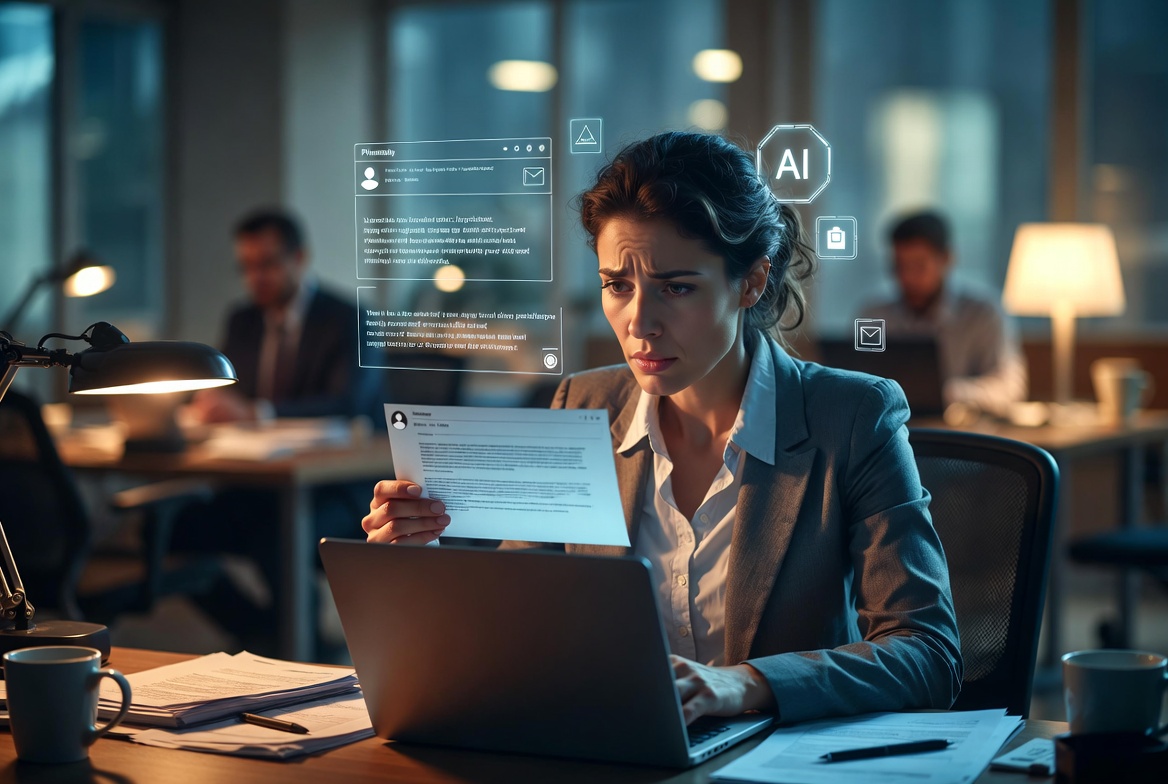
AI Phishing Is Getting Harder to Spot. Is Your Business Ready?
AI phishing attacks on small businesses are becoming harder to spot because fake emails, login pages, invoices, texts, and vendor requests can now look highly convincing. What once stood out because of poor grammar or unusual wording can now sound like a real coworker, client, vendor, or executive.
For a small business, one mistaken click or rushed approval can expose email accounts, client information, financial records, cloud files, and critical business systems.
That is why cybersecurity can no longer depend on employees simply “being careful.” Businesses need layered protection, stronger access controls, email security, reliable backups, continuous monitoring, and a clear response plan. Cloud Choice Technologies provides managed IT services with cybersecurity built into the foundation.
What Is AI-Powered Phishing?
AI-powered phishing uses artificial intelligence to make scams more convincing, personal, and difficult to detect.
Instead of sending the same generic message to thousands of people, attackers can create emails that match a team’s tone, reference real projects, imitate trusted contacts, or mimic an executive’s writing style.
They may also build fake login pages that closely resemble Microsoft 365, banking portals, payroll systems, or file-sharing platforms.
The FTC explains phishing as deceptive communication that appears to come from a legitimate source and attempts to steal sensitive information.
Common examples include fake invoice requests, Microsoft 365 login pages, vendor payment changes, password reset messages, file-sharing notifications, and urgent payroll or HR requests.
The goal is simple: convince someone to click, log in, approve a payment, download a file, or share sensitive data.
Why Small Businesses Need Stronger Cybersecurity Protection in 2026
Small businesses are often targeted because they may have fewer security resources, less internal IT support, and less time to investigate every unusual message.
Many rely heavily on email, cloud applications, shared documents, remote access, banking portals, payroll systems, and industry-specific software. That makes cloud and email accounts especially valuable to attackers.
If your business depends on Microsoft tools each day, Microsoft 365 support can help strengthen account security, access controls, and cloud collaboration.
A successful attack may begin quietly. An employee enters a password on a fake login page. The attacker accesses the mailbox, monitors conversations, and then sends a payment request from a trusted account.
The FBI’s 2025 Internet Crime Report identifies business email compromise as a major cybercrime loss category, which makes proactive email and account protection especially important.
Why AI Phishing Threats Are Harder to Detect

Traditional phishing training focused on obvious warning signs such as spelling errors, awkward greetings, unusual links, or messages that did not sound professional.
Those warning signs still matter, but they are no longer enough.
AI can help attackers create polished messages that fit naturally into everyday business communication. A phishing attempt may look like a normal vendor follow-up, an invoice question, a shared document alert, an executive request, or a Microsoft 365 security notification.
Recent reporting also described an FBI takedown involving an AI-powered phishing service connected to more than one million phishing URLs. That example shows how easily criminals can now create realistic messages and fake websites at scale. You can read more about the case from TechRadar.
The message may not look suspicious. It may look routine. That is what makes it dangerous.
Common AI Phishing Scenarios Affecting Small Businesses
Fake Executive Requests
An employee receives an email or text that appears to come from the owner, manager, or department head. The message may request a payment, document, password reset, or urgent action.
Because the request appears to come from leadership, the employee may act before verifying it through another channel.
Vendor Payment Changes
A message appears to come from a known supplier or contractor and claims that banking information has changed.
These attacks are especially risky for companies that regularly process invoices, wire transfers, or vendor payments.
Fake Microsoft 365 Login Pages
An employee receives a notification about a shared file, voicemail, invoice, or password issue. The link opens a fake login page designed to capture Microsoft 365 credentials.
Once inside the account, an attacker may read messages, change mailbox rules, impersonate the employee, or search for financial opportunities.
The Full Impact of a Successful Attack
Phishing is often the entry point for a larger security incident.
One compromised account can lead to business email compromise, stolen client information, unauthorized file access, fraudulent payments, ransomware, operational downtime, compliance problems, and reputational damage.
The FTC’s cybersecurity guidance for small businesses recommends combining employee awareness with secure systems and a clear plan for responding when something goes wrong.
Cloud Choice Technologies offers cybersecurity services that help businesses reduce risk and strengthen day-to-day protection.
How Small Businesses Can Reduce AI Phishing Risk
Use MFA and Strong Password Protection
Multi-factor authentication adds another security layer beyond a password. Even when a password is stolen, MFA can make unauthorized access more difficult.
CISA recommends multifactor authentication for small and medium businesses because passwords alone are no longer enough.
Businesses should also avoid weak, reused, or shared passwords. A password manager can help employees create strong, unique credentials without storing them in spreadsheets, notes, or shared documents.
Strengthen Email Security and Employee Training
Email security tools can help block suspicious links, attachments, spoofed senders, and malicious messages before they reach employees.
Practical training is also essential. Employees should know how to verify payment changes, question urgent requests, recognize fake login pages, and report suspicious messages quickly.
CISA provides guidance on how to teach employees to avoid phishing.
The goal is not to blame employees. It is to make reporting fast, easy, and normal.
Secure Cloud Tools and Limit Access
Many phishing attacks target cloud accounts because that is where businesses store email, documents, files, calendars, and shared workspaces.
Cloud tools should be configured with appropriate security settings, permissions, and backup policies. Cloud Choice Technologies helps businesses manage cloud services so their systems remain usable and better protected.
Businesses should also follow the principle of least privilege by giving employees only the access they need to perform their jobs.
Administrator permissions should be limited, reviewed regularly, and protected with stronger controls.
Back Up Data and Prepare a Response Plan
Reliable backups can help a business recover if phishing leads to ransomware, file corruption, or account compromise.
Cloud Choice Technologies provides data backup and recovery support to help businesses protect important information and recover faster.
Every business should also have a simple incident response plan. It should explain who employees contact, how quickly passwords are reset, how active sessions are revoked, who reviews mailbox rules, and who checks payment activity.
For businesses that need help prioritizing these steps, IT consulting can identify the most important security gaps first.
Use Continuous Monitoring
Continuous monitoring can help identify unusual logins, suspicious account activity, security alerts, and unexpected system behavior before the problem spreads.
Monitoring is especially important for businesses without internal security staff reviewing alerts throughout the day.
Why Managed IT and Cybersecurity Support Matters

Most small businesses do not have the time or internal resources to monitor threats, manage security settings, train employees, secure cloud accounts, maintain backups, and respond to incidents alone.
Cloud Choice Technologies helps businesses strengthen protection through managed IT services, cybersecurity, Microsoft 365 support, data backup and recovery, access reviews, security awareness, and ongoing monitoring.
Whether your business is based in Florida or operates across multiple locations nationwide, Cloud Choice Technologies can help create a more secure and reliable IT foundation. View the areas we serve on our locations page.
Quick Answer: How Can Small Businesses Protect Against AI Phishing in 2026?
Small businesses should combine multi-factor authentication, email security, practical employee training, password management, strict access controls, secure backups, continuous monitoring, and a clear response plan. Since AI makes phishing messages and fake login pages more convincing, businesses should not rely on employees alone to catch every threat.
FAQs About Small Business Cybersecurity and AI Phishing
What makes AI phishing different from traditional phishing?
AI can create natural, personalized messages that match professional writing styles and blend into everyday business communication.
Are small businesses really at risk?
Yes. Small businesses often rely heavily on cloud tools and fast communication while operating with fewer internal security resources.
Does MFA fully prevent phishing?
No. MFA reduces risk, but it works best when combined with email filtering, employee training, access controls, monitoring, and rapid response.
What should an employee do after clicking a suspicious link?
Report it immediately. The business should reset passwords, revoke active sessions, check mailbox rules, review account activity, and confirm whether data or payments were affected.
Final Takeaway
AI-powered phishing is increasing cybersecurity risk for small businesses that depend on email, cloud tools, and fast digital communication.
The strongest defense combines people, processes, and technology in a layered approach.
Cloud Choice Technologies can help identify security gaps and recommend practical protections that support your daily operations and future growth.
Schedule a free cyber risk analysis with Cloud Choice Technologies and take a proactive step toward stronger small business cybersecurity protection.